
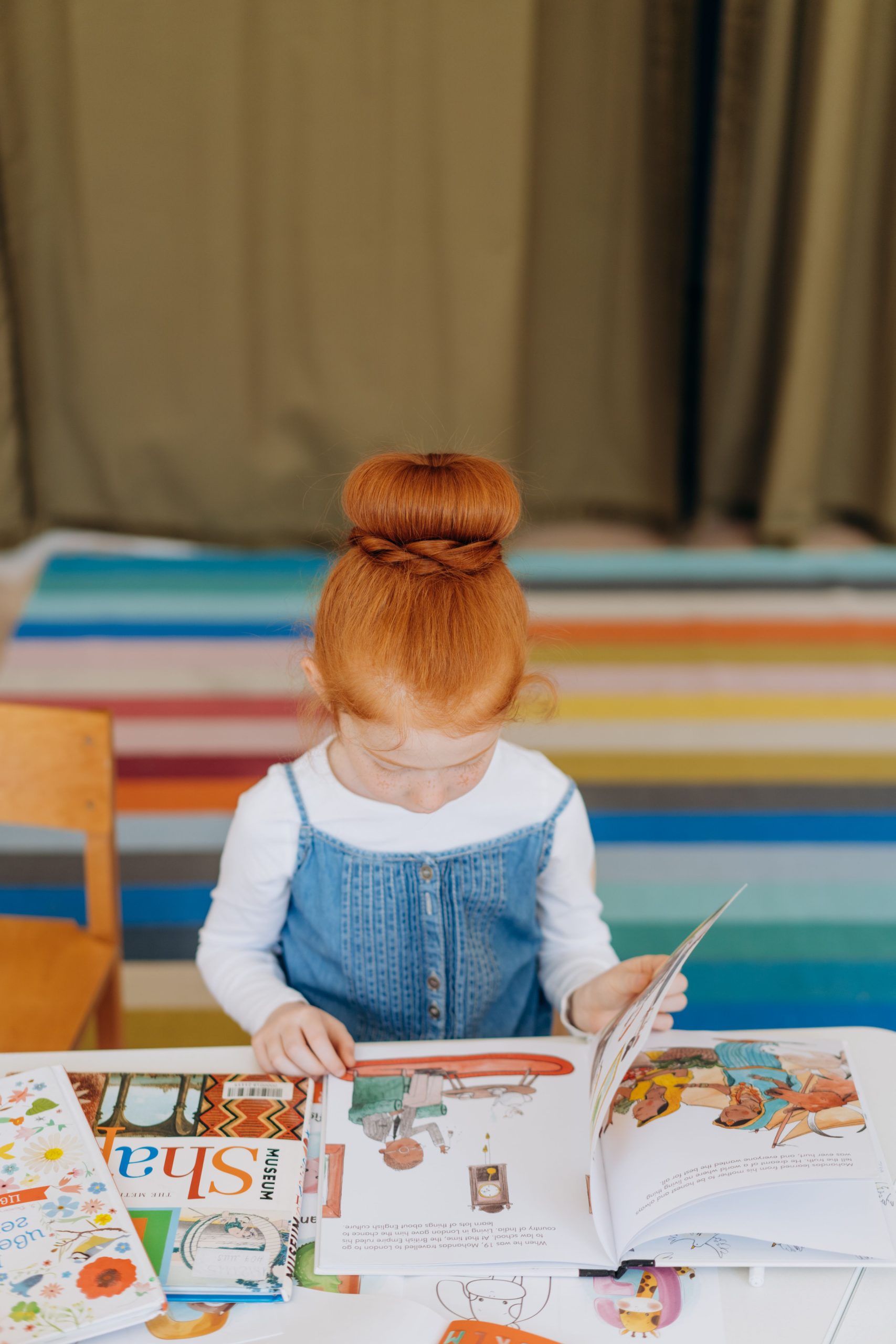
Families with one child who are considering homeschooling encounter a version of the socialization question that feels especially pointed. The typical response to socialization concerns — “homeschoolers have co-ops, sports, and community activities” — applies to all homeschoolers, but for only-child families it doesn’t fully address what makes the question feel real: a child who comes home to an adult household every day, with no siblings to interact with, no built-in peer environment, and a parent as their primary daily companion.
This isn’t a reason not to homeschool. But it’s a real dynamic that deserves honest treatment rather than the standard reassurance.
What the Socialization Question Is Actually Asking
When people ask about socialization for an only-child homeschooler, they’re usually combining several distinct concerns that are worth separating:
Peer interaction. Does the child spend enough time with age-peers? This is a legitimate logistical question with a logistical answer — how the family structures activities that bring the child into regular contact with peers.
Social skill development. Does the child develop the ability to navigate group dynamics, resolve conflicts with peers, share space and attention, work in teams, and manage the social complexity that comes with being among many children? This is a developmental question about whether the child is developing competence in social environments.
Social comfort in group settings. Does the child become comfortable operating in larger groups, in institutional settings, in environments they don’t control? This is a temperament and exposure question.
Sibling dynamics specifically. Does the child develop the negotiation, sharing, and conflict resolution skills that grow from living with siblings? This is the one concern for which homeschooling with peers genuinely cannot fully substitute — sibling dynamics are their own developmental domain.
Addressing the socialization question for an only-child homeschooler means being honest about each of these separately rather than treating “socialization” as a single thing with a single answer.
What Works for Peer Interaction
The structural solution for an only-child homeschooler is the same as it is for all homeschoolers, but it needs to be implemented with more intentionality. When there are no siblings in the house, the peer interactions that happen in the school building — hallway time, lunch, group projects, recess — need to be deliberately created rather than passively provided.
A co-op with consistent membership. A homeschool co-op that meets weekly with the same group of children provides the repeated exposure to the same peers that builds genuine relationships rather than the superficial familiarity of occasional contact. Co-ops where children work on projects together, not just sit in parallel enrichment classes, provide richer social context.
A team sport or ensemble. Team sports — particularly ones with regular practices and games over a season — create the kind of sustained, goal-directed peer interaction that develops social skills in ways that drop-in activities don’t. The shared effort, the negotiation of team dynamics, the experience of winning and losing together all belong to the category of social development that matters for an only child. A youth orchestra, band, or theater program provides the same sustained ensemble dynamic.
A regular group activity with consistent membership. This might be a martial arts class, a Scout troop, a youth group, a community theater program, a 4-H chapter — the format matters less than the consistency. The child who attends the same activity with the same group of peers over months and years is developing genuine peer relationships. The child who attends a rotating variety of drop-in activities is having experiences, not developing the relationships that matter most.
Neighborhood and community. An only-child homeschooler needs a neighborhood, an apartment building, a congregation, or another community structure where the same children are present regularly without it being scheduled. This is harder to engineer and is partly a function of where the family lives and how they live — but it matters for the less structured, self-directed peer interaction that develops social agency.
The Parent-as-Teacher Dynamic
For all homeschoolers, the parent-as-teacher relationship is a distinctive dynamic worth thinking about. For only-child homeschoolers, it’s especially significant because the parent is not just the teacher but often the primary daily companion.
There are genuine advantages. The instructional relationship between a parent and their only child can be unusually responsive, efficient, and intellectually rich. Conversations can go deep. The parent’s attention is undivided. The child’s intellectual interests and learning needs are known with a specificity that a classroom teacher serving thirty students cannot achieve.
There are also real challenges worth naming:
The social intensity of the one-to-one learning relationship. In a classroom, a child who is struggling with a concept, frustrated, or having a bad day is one of many — the emotional moment is contained within a larger social environment. In a one-to-one homeschool, the emotional moment is the entire environment. Parents and children who navigate this well usually develop explicit norms about when the teaching relationship is on, what frustration is allowed to look like, and how to reset when a lesson goes sideways.
The challenge of calibrating expectations. Parents who know their children extremely well sometimes struggle to distinguish between “this child is capable of more” and “this child is doing their best.” The intimacy of the homeschool relationship can make this harder, not easier. An honest assessment of where the child actually is, independent of where the parent hopes they are, is worth maintaining deliberately.
The need for the parent to not be the only adult influence. A child who spends most of their day with one parent, however excellent that parent’s teaching, is missing the diversity of adult intellectual styles, personalities, and approaches that comes from exposure to multiple teachers. Co-op instructors, tutors, coaches, mentors, and community figures who interact with the child in instructional or near-instructional roles contribute something the parent-teacher alone cannot fully provide.

Ready to bring order to your homeschool?
Join homeschool families who traded binders and spreadsheets for a planner that actually keeps up with them. Start your free 14-day trial today.
14-day free trial · Cancel any time
Academic Advantages That Are Real
Only-child homeschooling has genuine academic advantages that are worth naming, because the conversation often focuses only on concerns.
Complete individualization. The curriculum, the pace, the depth, and the approach are designed for exactly one student. There is no averaging across multiple children’s learning needs, no faster sibling setting the pace, no slower sibling creating patience requirements. The only child’s learning is the entire curriculum design problem.
Intellectual richness of adult conversation. An only child in a homeschool household often develops unusually sophisticated vocabulary, broad general knowledge, and strong verbal reasoning from consistent exposure to adult conversation, adult reading material, and the kind of intellectual discussion that emerges naturally between an engaged parent and a curious child. This advantage is real and significant.
Ability to follow genuine interest deeply. Without the schedule constraints of coordinating multiple children’s activities and learning needs, the only-child homeschool can follow genuine interest much further than a multi-child homeschool often can. A child who develops a deep interest in astronomy, medieval history, or marine biology can pursue it with a depth of time and resource that sibling scheduling often forecloses.
What to Watch For
Separation anxiety and social discomfort. An only child who spends most of their time with a parent and who lacks consistent peer interaction can develop real discomfort in groups and institutional settings — not from homeschooling per se, but from insufficient peer exposure over time. Monitoring the child’s genuine comfort in group settings — not their behavior at home, but how they handle novel group environments — provides early warning if the peer interaction program needs adjustment.
Overreliance on the parent relationship. A child who prefers adult company to peer company, who consistently chooses time with parents over time with peers, or who shows genuine difficulty building peer relationships is a child whose social development may need more attention. This is not specific to homeschoolers — only children in traditional schools sometimes show the same pattern — but it’s worth watching for.
Academic isolation. An only-child homeschooler who never experiences working alongside peers, competing academically, or collaborating on group projects may have gaps in social-academic skills that become apparent in college or workplace settings. Ensuring the child has regular academic experiences in group settings — co-op classes, dual enrollment, academic competitions, group projects — addresses this.
The Bottom Line
Homeschooling an only child works exceptionally well when the family is deliberate about building consistent peer relationships rather than treating socialization as something that will take care of itself. The academic conditions — full individualization, deep adult engagement, intellectual richness — are often ideal. The social conditions need to be actively constructed rather than passively provided.
A co-op with consistent membership, a team sport or ensemble, and a regular community presence are not optional extras for an only-child homeschooler. They’re the structural elements that make the rest work. Families who build these in from the beginning, and who maintain them consistently across the years, produce only-child homeschoolers who are socially capable, academically strong, and genuinely well-educated.