
Lesson planning is where many new homeschool families either build a sustainable rhythm or burn out trying to maintain one. The instinct, especially early on, is to plan in exhaustive detail — every subject, every day, mapped out weeks in advance. This approach often works for about three weeks before life intervenes and the plan collapses under its own weight.
A lesson plan that actually saves time isn’t the most detailed one. It’s the one that provides enough structure to remove daily decision fatigue without requiring so much maintenance that planning itself becomes a second job. This guide covers how to build that kind of system.
What a Lesson Plan Is Actually For
Before building a system, it helps to be clear about what a lesson plan needs to accomplish. At its core, a lesson plan answers three questions in advance so they don’t need to be answered fresh every morning: what is being covered, in what order, and with what materials.
A lesson plan is not a record of what already happened — that’s a teaching log or attendance record, a related but separate tool. It’s not a curriculum — the curriculum is the content; the lesson plan is the schedule for moving through that content. And it’s not a guarantee — a good lesson plan is a working draft that gets adjusted as the year unfolds, not a contract the family is bound to follow exactly.
Understanding this distinction prevents a common trap: treating deviation from the plan as failure, rather than as the plan doing its job of being a flexible guide.
Start From the Curriculum, Not From a Blank Calendar
The most efficient lesson planning starts with the curriculum’s own structure rather than building a schedule from scratch. Most curricula — whether a boxed program, an individual textbook, or a more flexible resource — already have a built-in sequence and pacing suggestion. A math program with 180 lessons for a 180-day school year has effectively already done the pacing math.
The lesson planning task, in this case, becomes mapping that existing sequence onto an actual calendar — accounting for the family’s specific school year length, planned breaks, and any days already known to be unavailable — rather than inventing a sequence independently.
For families using a more flexible or assembled curriculum without a built-in day-by-day structure, more planning work is required upfront, but the same principle applies: establishing an overall sequence and rough pacing before getting into day-by-day detail saves significant time later.
Plan in Layers, Not All at Once
One of the most time-saving lesson planning practices is separating planning into different time horizons, rather than trying to plan an entire year in one sitting or, at the other extreme, planning only one day at a time with no broader view.
Yearly overview. This is the highest-level layer — what subjects will be covered, roughly what resources will be used for each, and how the school year is broken into terms or semesters. This doesn’t need to be detailed; it’s a map, not turn-by-turn directions.
Term or unit planning. Within each term, more specific planning happens — which chapters or units will be covered, roughly how many weeks each will take, and any specific projects or assessments planned for that term. This is typically done a few weeks before each term begins, which means the plan benefits from knowing how the previous term actually went, rather than guessing months in advance.
Weekly planning. This is where the term plan gets broken into a specific week — which lessons, in what order, with what materials needed. Weekly planning is typically the most time-efficient to do consistently, often taking fifteen to thirty minutes done at the same time each week, such as Sunday evening or Friday afternoon for the week ahead.
Daily reference. The daily plan, ideally, requires no additional planning time at all — it’s simply consulting the weekly plan already made. If daily planning is taking real time and thought, it’s often a sign the weekly layer needs more detail, not that daily planning needs to become its own separate task.
This layered approach means the heavy thinking happens at the yearly and term level, infrequently, while the weekly layer — the one that happens constantly — stays lightweight and fast.

Ready to bring order to your homeschool?
Join homeschool families who traded binders and spreadsheets for a planner that actually keeps up with them. Start your free 14-day trial today.
14-day free trial · Cancel any time
Build a Template You Reuse
A significant amount of lesson planning time is lost not to the thinking involved, but to the formatting — recreating a layout, deciding where things go, building a new structure every week. A reusable template eliminates this entirely.
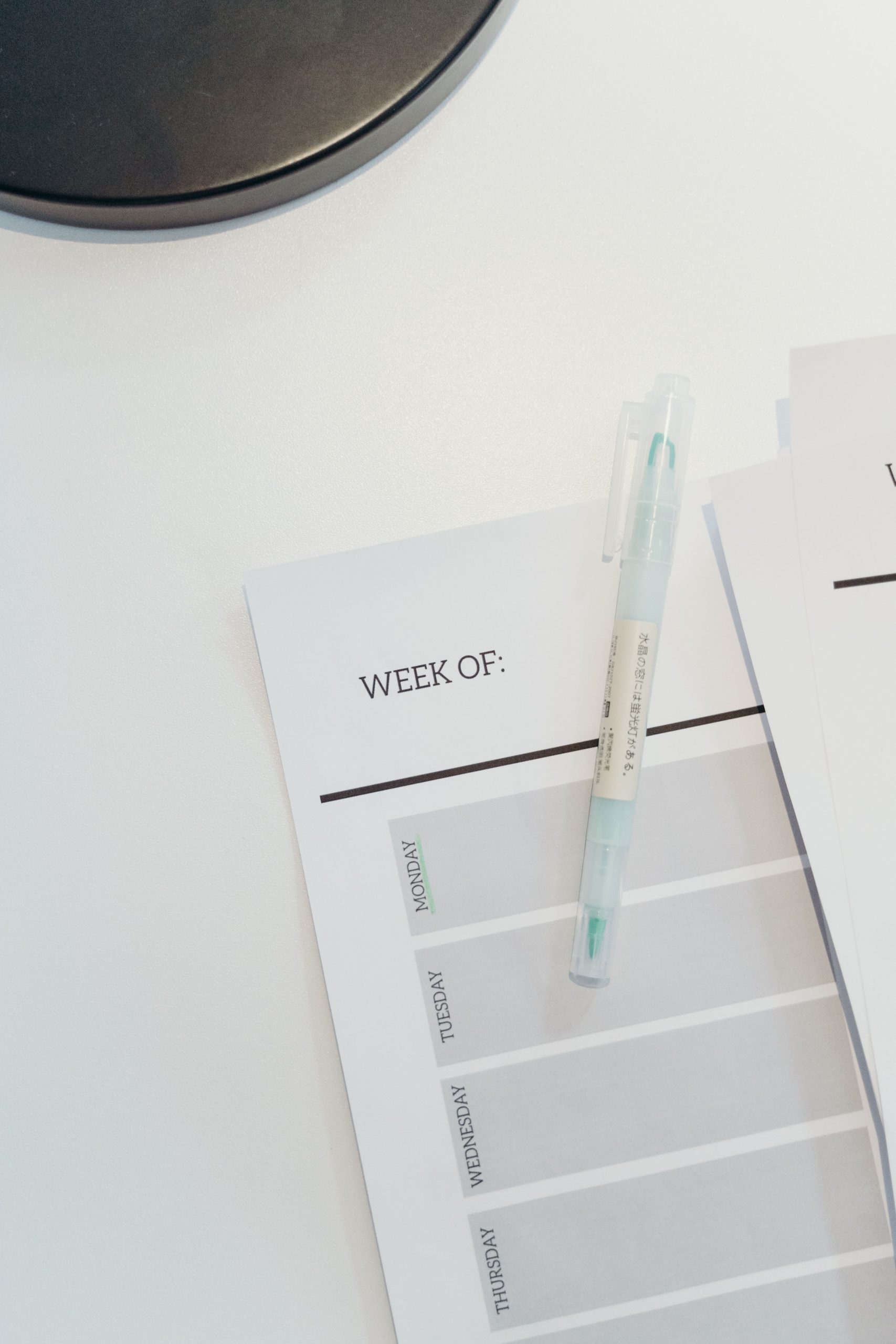
A practical weekly lesson plan template typically includes: a row or block per subject, columns or sections for each day of the week, space for the specific lesson or page numbers, and a small space for materials needed.
Whether this template lives in a printed planner, a spreadsheet, a word processing document, or a dedicated planning tool, the time savings come from not rebuilding the structure every single week — only filling in the content that changes.
Plan Backward From Assessments and Milestones
For subjects with clear endpoints — a unit test, a project due date, a co-op class that covers specific material by a certain week — planning backward from that date is often more efficient than planning forward and hoping to arrive on time.
This means identifying the date something needs to be complete, then working backward to determine how much material needs to be covered each week to arrive there comfortably, with some buffer built in for the inevitable week that doesn’t go as planned.
This approach also surfaces pacing problems early. If working backward from a deadline reveals that an unrealistic amount of material needs to be covered each week, that’s valuable information in week one — not something to discover with two weeks left before the deadline.
Build In Buffer Time Deliberately
A lesson plan that assumes every single day will go exactly as scheduled is a lesson plan that will constantly feel behind, because real life doesn’t cooperate with that assumption. Illness, appointments, a day that simply doesn’t go well, and unplanned field trips are not exceptions to a homeschool year — they’re a normal part of it.
Building deliberate buffer days into the term plan — unscheduled days every few weeks that exist specifically to absorb whatever didn’t get done — means the plan can flex without falling apart. Without this buffer, every missed day creates a permanent one-day deficit that compounds over the term.
A reasonable starting point is one buffer day for every two weeks of instruction, though this varies based on a family’s specific circumstances — families managing therapy schedules, multiple young children, or other significant time demands may need more.
Adjust the Plan Based on What Actually Happens
The most time-saving lesson planning habit, paradoxically, isn’t something done while planning — it’s something done while reviewing how the previous week actually went. A brief look back, even five minutes, at what took longer than expected, what went faster than expected, and what got skipped, makes the next week’s plan dramatically more accurate.
Without this feedback loop, lesson plans tend to drift further from reality every week, because the same overly optimistic estimate of how long something takes gets repeated week after week. With it, planning becomes increasingly accurate over the course of a year, because it’s informed by real data rather than initial assumptions.
Planning for Multiple Children
Families teaching more than one child face an additional layer of complexity: coordinating lesson plans across children who may be at different grade levels, working at different paces, or needing different amounts of direct parental instruction at the same time.
A few approaches that tend to reduce planning time in this situation:
Stagger subjects that need direct instruction. If two children both need hands-on help with math, having them at different points in their math lesson — one working independently while the other gets direct instruction — avoids the bottleneck of needing to be in two places simultaneously.
Use shared resources where possible. History, read-alouds, and certain science topics can sometimes be taught to multiple children together, with the specific written work or assessment differentiated by grade level afterward. This single point of instruction, multiple points of output approach reduces total planning and teaching time compared to fully separate lessons for each child.
Build independent work blocks into each child’s day. Lesson plans for multi-child homeschools tend to work better when each child has clearly defined independent work — material they can complete without direct parental involvement — scheduled specifically during the time the parent needs to be working directly with another child.
When to Stop Planning and Start Adjusting
A lesson plan that requires constant, significant revision every single week is providing a signal worth listening to — usually that the pacing was unrealistic from the start, the curriculum isn’t a good fit, or the planning layer (yearly, term, or weekly) needs to be rebuilt with more accurate assumptions.
The goal of lesson planning is never adherence to the plan for its own sake. It’s a tool to reduce daily decision-making and keep a homeschool year moving forward with reasonable consistency. When the plan stops serving that purpose, adjusting the plan — not forcing the days to match it — is the more productive response.
The Bottom Line
An efficient homeschool lesson planning system separates planning into layers — yearly, term, weekly, and daily — so that detailed thinking happens infrequently and lightweight maintenance happens often. It starts from the curriculum’s existing structure rather than building pacing from scratch, uses a reusable template to eliminate repeated formatting work, and builds in deliberate buffer time to absorb the disruptions every real homeschool year experiences.
The time saved doesn’t come from planning less — it comes from planning at the right altitude for each task, and adjusting the plan based on what actually happens rather than rebuilding it from optimistic assumptions every single week.