
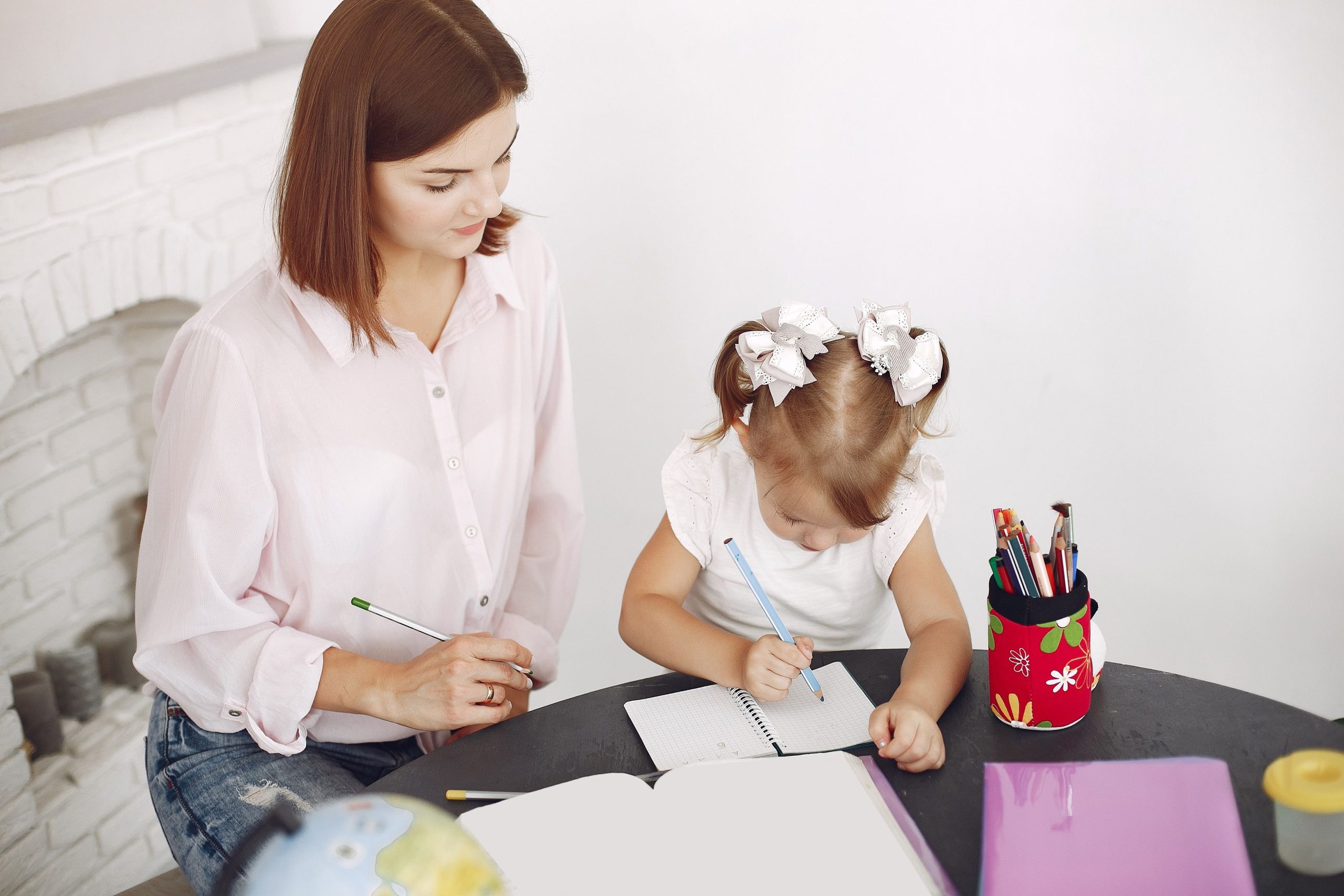
Unschooling is simultaneously one of the most misunderstood and one of the most interesting approaches to home education. It’s frequently caricatured — either as children doing nothing all day while parents congratulate themselves on their radical philosophy, or as a magical approach where children naturally and effortlessly acquire everything they need to know by following their bliss. Neither caricature is accurate, and both obscure what unschooling actually involves and why some families find it genuinely effective.
This guide takes an honest look at what unschooling is, what it isn’t, what it requires from families who do it well, and what the realistic concerns are that any family should think through before choosing this approach.
What Unschooling Actually Means
Unschooling is a philosophy of education based on the idea that children are naturally curious and intrinsically motivated to learn — and that this natural drive is best supported by giving children significant freedom to pursue their own interests, rather than following a predetermined curriculum or structured daily schedule imposed by adults.
The term was coined by educator John Holt in the 1970s, drawing on his observation that children often learn most deeply and retain most effectively when they’re genuinely interested in what they’re learning — and that conventional schooling frequently interferes with natural curiosity rather than nurturing it.
In practice, unschooling looks different in every family that practices it, but common elements include:
- No fixed curriculum and no predetermined subject matter to be covered on a schedule
- Learning driven primarily by the child’s questions, interests, and chosen activities
- A parent role focused on facilitating, providing resources, and creating a rich learning environment rather than directing instruction
- Real-world experience — conversation, observation, books, projects, travel, play — as the primary medium of learning
- No grades, tests, or formal assessments as the primary means of evaluating progress
What’s often misunderstood is that unschooling does not mean absence of structure or parental involvement. It means a different kind of structure and a different kind of involvement — one organized around the child’s emerging interests rather than an adult-determined scope and sequence.
What Unschooling Is Not
It is not neglect. An unschooling parent who is genuinely doing unschooling is typically deeply involved in their child’s learning — noticing interests, providing resources, asking questions, facilitating experiences, and engaging in sustained conversation about what the child is discovering. The absence of a formal curriculum does not mean the absence of engaged parenting.
It is not unparenting. Unschooling applies to the educational philosophy, not to parenting broadly. Unschooling families have the same range of parenting approaches as any other group — some are permissive, some have clear household expectations and expectations for behavior and responsibility. Unschooling is not a philosophy of unlimited child autonomy in all domains of life.
It is not the same as deschooling. Deschooling is a transition period — typically recommended for families new to homeschooling — during which the child and family decompress from the school environment before beginning whatever approach they’ll use long-term. Deschooling is temporary; unschooling is an ongoing educational philosophy.
It is not the absence of learning structure. Many unschooling families have daily rhythms, regular activities, and patterns that provide structure — not because a curriculum requires it, but because structure naturally emerges from a life that includes regular activities, responsibilities, and interests. The structure is responsive and organic rather than predetermined.
The Theoretical Foundation
John Holt’s foundational argument was that children learn naturally and effectively when learning is connected to genuine interest and real purpose. He observed that children before formal schooling learn enormously complex skills — language, physical coordination, social navigation — without instruction, and that formal schooling frequently damages rather than enhances this natural learning drive by replacing intrinsic motivation with external reward and compliance.
Peter Gray, a research psychologist who has written extensively on play-based and self-directed learning, has added a research dimension to Holt’s philosophical framework. Gray’s research and writing on hunter-gatherer childhood education, the decline of free play, and the outcomes of students at Sudbury Valley School (a democratic free school in Massachusetts) has provided some empirical grounding for the argument that self-directed learning produces competent, motivated adults.
Neither Holt’s philosophy nor Gray’s research is without criticism, and the evidence base for unschooling outcomes specifically is thinner than advocates sometimes suggest. Most of the research on homeschool outcomes doesn’t disaggregate unschooling families from structured homeschooling families, making it difficult to evaluate unschooling outcomes independently.

Ready to bring order to your homeschool?
Join homeschool families who traded binders and spreadsheets for a planner that actually keeps up with them. Start your free 14-day trial today.
14-day free trial · Cancel any time
What Unschooling Looks Like Day to Day
The daily reality of unschooling varies so much between families that any description is a generalization. A few sketches of what it might look like:
A child who is intensely interested in dinosaurs spends weeks reading everything available about paleontology, drawing detailed illustrations of dinosaurs, building models, watching documentaries, and asking a constant stream of questions. The parent finds library books, locates a natural history museum visit, and engages in extended conversations about what the child is learning. The child has covered biology, geology, history, drawing, and research skills — not because those were assigned, but because the interest led there.
A teenager who is passionate about music spends significant time each day playing an instrument, writing songs, recording, and studying music theory. The parent finds a mentor, arranges performances, and provides access to music theory resources when the child asks for them. The teenager is developing discipline, creativity, technical skill, and a body of work — not because a schedule required it, but because the interest sustains the effort.
A child who loves to cook spends time in the kitchen working through recipes, experimenting with ingredients, and learning to follow complex instructions. The parent treats cooking time as genuinely educational — discussing measurement, chemistry, cultural history of dishes, and the math of scaling recipes. The learning is real; the context is life rather than school.
What Unschooling Requires From Parents
Unschooling is not a passive approach, and families who choose it because it seems like less work than structured homeschooling typically find that it requires a different and often substantial investment of attention, creativity, and resources.
Sustained observation. An unschooling parent needs to pay close attention to what a child is actually interested in, what questions they’re asking, and what kinds of experiences produce genuine engagement — not just what the child says they want in a given moment. This requires attentive presence rather than distance.
Active resource provision. A child who is following an interest needs access to resources: books, materials, experiences, people with expertise, places to visit. The parent’s role is to make those resources available, which requires both awareness of what’s available and willingness to invest in obtaining it.
Rich conversation. The parent in an unschooling family functions significantly as a thinking partner — asking questions, offering information, discussing ideas, and engaging substantively with whatever the child is exploring. This kind of sustained intellectual engagement is not passive.
Trust and patience. The development of learning through unschooling is not always linear or immediately visible in conventional terms. A period that looks from the outside like a child doing nothing may involve significant internal processing. Maintaining trust in the process during fallow periods requires genuine philosophical commitment, not just theoretical agreement with the approach.
Honest self-evaluation. One of the hardest aspects of unschooling is honestly distinguishing between a child who is learning deeply through self-directed exploration and a child who is genuinely disengaged, stuck, or not developing skills they need. This distinction requires more discernment than checking a curriculum’s progress against a scope and sequence — and it’s easy to rationalize disengagement as self-directed learning when honest assessment would reveal something different.
Realistic Concerns About Unschooling
Any honest treatment of unschooling needs to address the legitimate concerns that critics — including thoughtful ones — raise about the approach.
Gaps in foundational skills. Some skills — reading, basic mathematics, written composition — don’t always develop naturally through interest-led exploration alone. A child who has no particular interest in arithmetic may reach adolescence without having developed fluency in mathematical operations that most post-secondary paths require. Unschooling advocates argue that these skills develop when needed and can be acquired quickly by motivated older learners; critics argue that the window for easy acquisition of some foundational skills may be narrower than this assumes.
The college pathway question. A student who unschooled through high school applying to a competitive four-year university faces a specific set of challenges: demonstrating academic preparation in the absence of conventional transcripts, grade records, and course titles. This is navigable — some unschoolers do successfully pursue competitive college admissions — but it requires deliberate attention to documentation and, often, supplemental credentials like standardized test scores, community college coursework, or portfolio work that demonstrates readiness. Families who want to leave a conventional college pathway open should plan for this from early in high school.
Self-motivation variation. The unschooling philosophy assumes that children, given freedom, will be intrinsically motivated to pursue meaningful learning. This is true for many children and not true for others. A child who is genuinely self-motivated and curious thrives under unschooling conditions. A child who defaults to passive entertainment in the absence of structure may not be developing in the ways unschooling assumes, and honest assessment of an individual child’s motivational profile matters for whether unschooling is actually a good fit.
Documentation challenges. State requirements for homeschooling vary, and in states with higher oversight — including portfolio review requirements, assessment requirements, or subject requirements — an unschooling approach requires more intentional documentation than families sometimes anticipate. An unschooling family in a low-oversight state has significantly more freedom than one in a high-oversight state.
Who Unschooling Works Best For
Research and the experience of families who have unschooled across the full K-12 span suggest that unschooling tends to work best when:
The child is genuinely curious and self-motivated, with interests that naturally drive sustained exploration rather than passive consumption. The family has access to rich resources — books, experiences, travel, mentors, cultural institutions — that can nourish diverse interests. The parents are genuinely philosophically committed to the approach and able to maintain trust through fallow periods without reverting to structure out of anxiety. And the child’s post-graduation goals don’t require conventional credential documentation that an unstructured high school record makes difficult to produce.
Families who choose unschooling because structured approaches weren’t working, without genuine philosophical commitment to self-directed learning, often find that the absence of structure produces different problems rather than solving the original ones.
The Bottom Line
Unschooling is a genuine educational philosophy with a coherent theoretical foundation and a body of families who report meaningful positive outcomes. It is not the absence of education or the absence of parental involvement — it’s a different kind of both, organized around the child’s natural learning drive rather than a predetermined curriculum.
It is also not appropriate for every child, every family, or every set of post-graduation goals. The most honest assessment is that unschooling can be an excellent approach for children who are genuinely self-motivated, in families with the philosophical commitment and resources to implement it well, and with honest ongoing evaluation of whether a child is actually developing the skills and knowledge they’ll need — not just the ones they’re currently interested in.